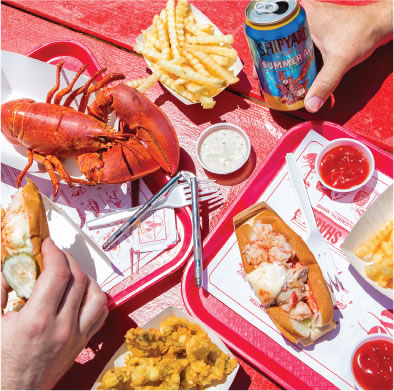
Portland’s brewing culture didn’t emerge overnight. Like many American cities, it rode the wave of the late-20th-century craft beer movement—but with a distinctly New England character. Old warehouses and industrial buildings became breweries, and neighborhoods like East Bayside evolved into dense clusters of fermentation tanks and taprooms.
Today, Portland boasts one of the highest brewery-per-capita rates in the United States, with styles ranging from Belgian-inspired ales to hazy IPAs and experimental sours. The city’s size is part of its charm: you can walk from one brewery to another in minutes, turning a casual afternoon into an impromptu tasting tour.
Yet long before Portland became a “beer tourism” hotspot, Shipyard was already brewing.
Shipyard Brewing Company: The Anchor of the Scene
Founded in 1994, Shipyard Brewing Company stands as one of Maine’s original craft breweries and a cornerstone of Portland’s beer identity.
Its story begins not in Portland, but in nearby Kennebunkport, where entrepreneur Fred Forsley and British brewer Alan Pugsley opened a brewpub in 1992. Demand quickly outgrew that small operation, leading to the establishment of Shipyard in Portland just two years later.
From the beginning, Shipyard blended Old World brewing traditions with American craft experimentation. Pugsley’s influence—rooted in English brewing techniques—gave Shipyard’s early beers a distinctive malt-forward profile, setting them apart in a market increasingly dominated by hop-heavy styles.
Over time, Shipyard grew into one of the largest breweries in Maine and a recognizable name across New England.
More Than a Brewery: A Cultural Catalyst
Shipyard’s importance goes beyond production numbers. It helped lay the groundwork for Portland’s modern beer culture—both economically and culturally.
Located near Casco Bay, the brewery occupies a renovated industrial space that reflects the city’s broader transformation from working waterfront to creative hub. Its tasting room, with rotating seasonal beers and a welcoming atmosphere, functions as both a tourist destination and a local gathering place.
Crucially, Shipyard demonstrated that a brewery in Maine could scale while maintaining a strong identity. Its success helped legitimize Portland as a serious brewing city, encouraging a new generation of brewers to set up shop nearby.
Signature Beers and Lasting Influence
Among Shipyard’s many offerings, Pumpkinhead stands out as a cultural phenomenon. Introduced in the late 1990s, the seasonal wheat beer became a fall staple across the Northeast, accounting for a significant portion of the brewery’s production despite its limited release window.
But Shipyard’s broader influence lies in its versatility. From traditional English-style ales to experimental small-batch brews, the brewery has consistently balanced heritage with innovation—a blueprint many Portland breweries still follow.
Tradition Meets Innovation
What makes Portland special is the coexistence of legacy and experimentation. At one end, you have Shipyard Brewing Company, representing continuity, scale, and history. At the other, a rotating cast of newer breweries constantly redefining what craft beer can be.
Rather than competing, these layers complement each other. Visitors might start at Shipyard to understand the roots of Maine brewing, then venture into smaller taprooms to taste its future.
Conclusion: Why Shipyard Still Matters
In a city now overflowing with choice, it’s easy to overlook the pioneers. But Portland’s craft beer reputation didn’t emerge from nowhere—it was built, in part, by breweries willing to take early risks and grow with the industry.
Shipyard Brewing Company is one of those breweries. It helped turn Portland into a beer destination, shaped the local palate, and proved that Maine could produce craft beer with national reach.
Today, whether you’re sipping a classic ale or chasing the latest hazy IPA, you’re participating in a culture that Shipyard helped create—one pint at a time.